



The Complete Guide to Cat 6 Cables: Specs, Uses & Maximum Length in 2026
Choosing the right Ethernet cable can define your network's reliability and speed, especially as digital demands grow. Category 6 cables, commonly known as Cat 6 cables, have become a backbone for fast and stable network connections across homes, offices, and data centers in India. This guide explores their technical specifications, suitable applications, and installation considerations in detail, helping users make confident decisions for current and future network needs.
What Are Cat 6 Cables and Their Technical Specifications?
Cat 6 cables represent twisted pair Ethernet cables categorized under the telecommunications industry association (TIA) standards, designed for high-speed data transmission. These cables support frequencies of up to 250 MHz, enabling standards like 100BASE-TX and even 10GBASE-T over shorter distances. Typically utilizing 22-26 AWG copper conductors, Cat 6 cables often come in shielded or unshielded variants to optimize performance. Compared to Cat 5e, they offer enhanced crosstalk reduction and higher bandwidth capacity, making them a preferred choice for gigabit ethernet networking.
Understanding the Design and Construction of Category 6 Cables
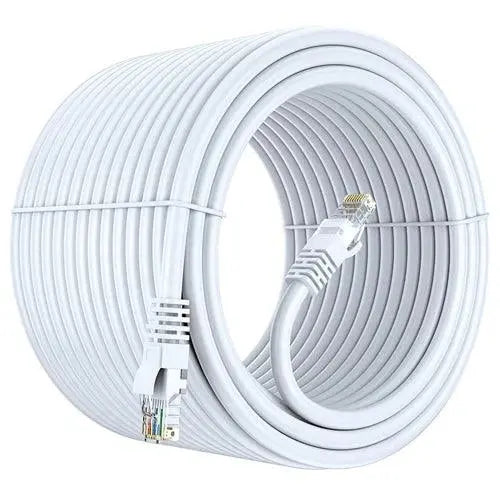
At the core of Cat 6 design is the twisted pair configuration, which minimizes crosstalk and system noise through precise twisting of copper wires. These cables generally include pure copper conductors enclosed in high-quality PVC or LSZH jackets for durability and heat resistance. Shielding options, such as FTP and STP, further reduce electromagnetic interference, vital in industrial environments. Termination usually employs 8P8C (RJ45) connectors, often gold plated to enhance connectivity, adhering to T568A or T568B wiring standards to maintain signal integrity.
Cat 6 Cable Performance and Maximum Length Limits Explained
While Cat 6 cables support a maximum length of 100 meters for 1 Gbps networks, this limit reduces to a maximum length of 55 meters for 10GBASE-T applications due to increased signal attenuation and crosstalk at higher data rates. Compared to Cat 5e, which also supports up to 100 meters but at lower frequencies, Cat 6 offers superior speed within the same length. Cat 6A extends this further, supporting 10GBASE-T at full 100 meters. Installation quality, such as avoiding sharp bends or improper terminations, plays a crucial role in maintaining these length capabilities and ensuring data integrity.
Shielding and AWG: What You Need to Know for Optimal Performance
The American Wire Gauge (AWG) size impacts cable flexibility and electrical performance; Cat 6 typically ranges between 22 and 26 AWG. Shielding types like UTP (unshielded twisted pair), FTP (foil shielded), and STP (shielded twisted pair) serve different needs based on environment. FTP and STP help mitigate system noise and crosstalk, which is critical in settings with high electromagnetic interference such as factories or densely packed network racks. Selecting the right shielding aligns with installation conditions, balancing cost and performance.
Key Use Cases and Applications of Cat 6 Cables
Cat 6 cables are widely used in gigabit ethernet networks, VoIP setups, CCTV surveillance systems, and data centers requiring stable, high-speed connections. Their ability to support faster data rates than Cat 5e makes them suitable for bandwidth-intensive applications like media streaming and server communications. Both residential and commercial telecommunications setups benefit from Cat 6’s reliable performance, often preferred by network device users and CCTV camera installers seeking future-ready infrastructure.
Category 6 vs Cat 6A and Cat 5e: Choosing the Right Cable
In bandwidth and crosstalk reduction, Cat 6 outperforms Cat 5e, covering frequency up to 250 MHz compared to Cat 5e’s 100 MHz. Cat 6A enhances this further, supporting frequencies up to 500 MHz and full-length 100 m 10GBASE-T transmission. While Cat 6A offers superior future-proofing, it comes at a higher cost and reduced flexibility. Selecting Cat 6 often represents a balance between performance and budget, suitable for most current applications without over-investing prematurely.
| Specification | Cat 5e | Cat 6 | Cat 6A |
|---|---|---|---|
| Max Bandwidth | 100 MHz | 250 MHz | 500 MHz |
| Max Length for 10GBASE-T | Not supported | 55 meters | 100 meters |
| Crosstalk Reduction | Good | Improved | Best |
| Typical Cost | Lowest | Moderate | Higher |
Installation Best Practices for Cat 6 Cables
Proper handling is essential when installing Cat 6 cables to prevent kinks and maintain the recommended bend radius, typically around four times the cable diameter. During termination, limiting the untwisting of pairs preserves their crosstalk resistance, with jacket stripping done carefully to avoid damage. Matching connectors, such as gold-plated RJ45 jacks, and following T568A or T568B standards ensure consistent performance. When using shielded cables, proper grounding is crucial to avoid ground loops that could introduce noise.
Common Issues: Crosstalk, System Noise, and Cable Quality Concerns
Crosstalk and system noise interfere with data transmission, but Cat 6’s design dramatically reduces these effects through precise twisted pairs and shielding options. However, counterfeit or substandard cables, like those using copper-clad aluminum (CCA) conductors, risk degraded speeds and unreliable connections. Symptoms include frequent packet loss and network drops. It’s advisable to purchase genuine Cat 6 cables made of pure copper from trusted manufacturers offering certifications and compliance with industry standards such as the telecommunications industry association (TIA).
How Telecommunications Industry Association (TIA) Standards Govern Cat 6 Cables
The TIA/EIA-568 standards define Cat 6 specifications, including performance testing and wiring methods, ensuring quality across manufacturers and installations. Adhering to these standards guarantees compatibility and predictable network behavior. Professional installations prioritizing TIA compliance also benefit from warranty protections and long-term reliability assurances.
Future Trends: Cat 6 Cables in Evolving Network Environments
With gigabit ethernet and 10GBASE-T deployments increasing, Cat 6 remains a cost-effective option for many typical network scenarios in 2026, balancing performance and price. While higher bandwidth demands might lead some to adopt Cat 6A or fiber optics, Cat 6 continues to serve residential, small business, and moderate enterprise environments effectively, combining affordability and wide availability.